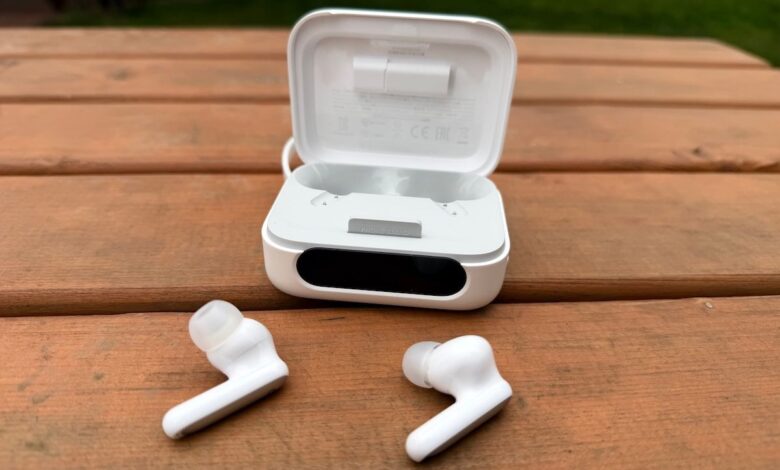
Anker’s versatile new earbuds, the Soundcore P41i, are changing the game in the budget-friendly segment with their massive 192-hour battery life and built-in power bank feature. Anker Soundcore P41i Review. We’ve prepared this in-depth review in accordance with TechThames.com’s professional hardware review standards and are pleased to present it to our valued readers. We hope you enjoy the read.
More Than Music: Anker Soundcore P41i Review – The 192-Hour Powerhouse
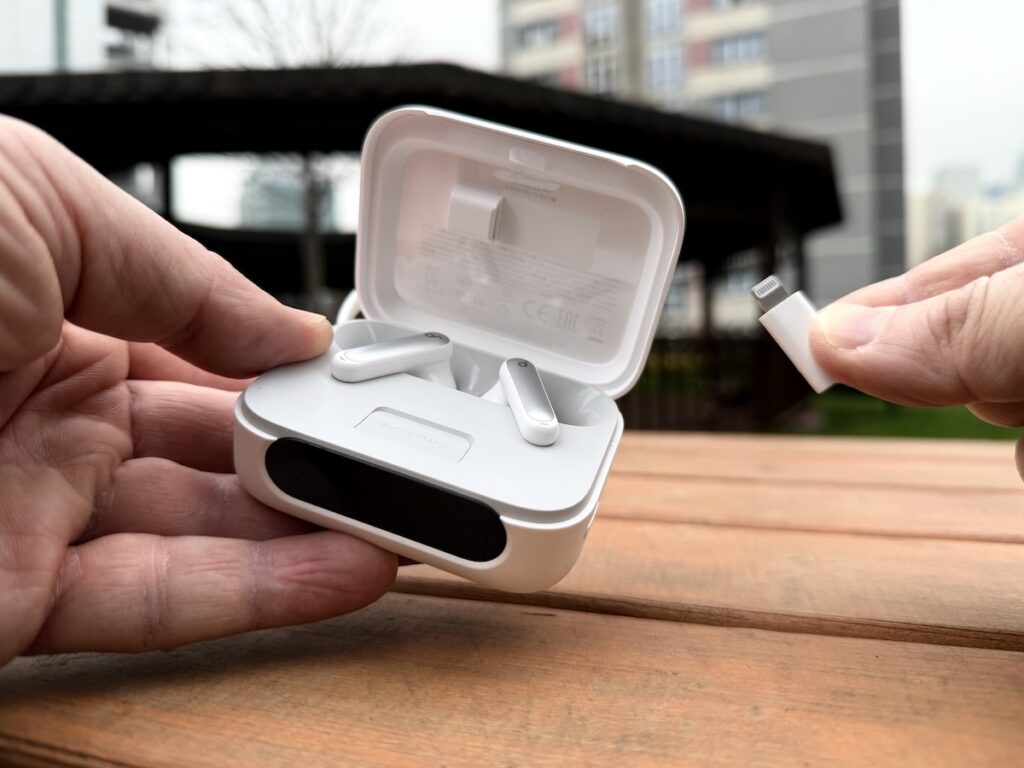
Anker has long been a household name for reliable charging solutions. Through its Soundcore sub-brand, it has successfully transitioned that trust into the audio world. Following the popular P40i, the new Soundcore P41i is perhaps their most ambitious “budget” move yet. This isn’t just an earbud; it’s a 3-in-1 hybrid that functions as a high-capacity powerbank and a phone stand.
At TechThames, we approached this “swiss-army knife” of audio with a healthy dose of skepticism. Can one device really master sound quality, noise cancellation, and emergency charging without compromising? Let’s dive in.
The Specs: High Energy, Low Codecs
On paper, the P41i is a mixed bag. It features 11mm composite drivers and Bluetooth 5.3, but audiophiles might be disappointed by the lack of high-res codecs. With only SBC and AAC support, it misses out on the LDAC or aptX found in competitors like the EarFun Air Pro 4.
The “Smart Case” Features:
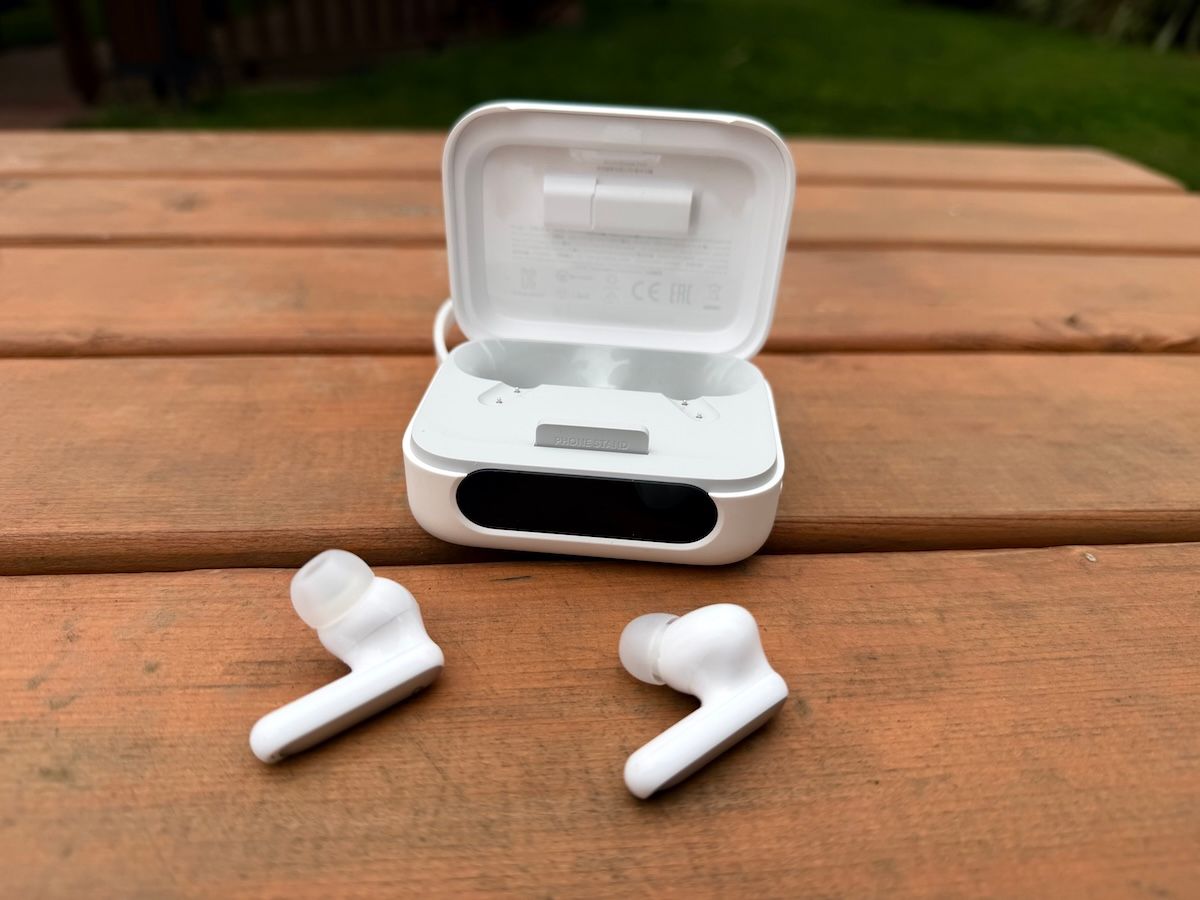
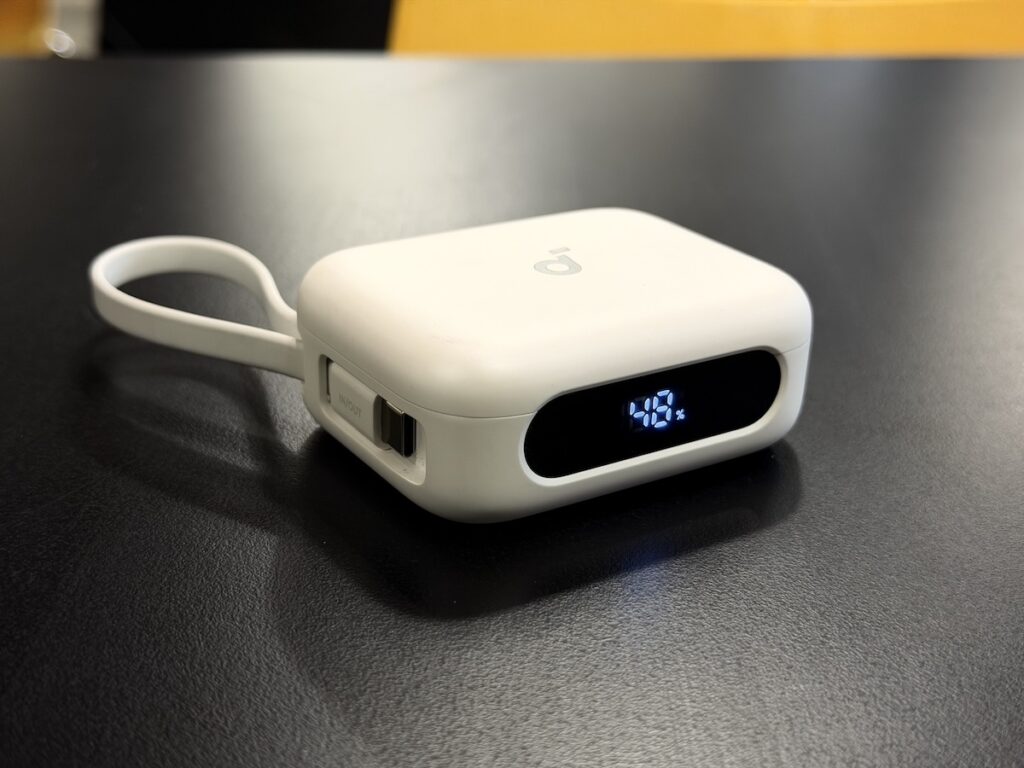
- 3,000mAh Battery: The case offers a staggering 192 hours of total playtime.
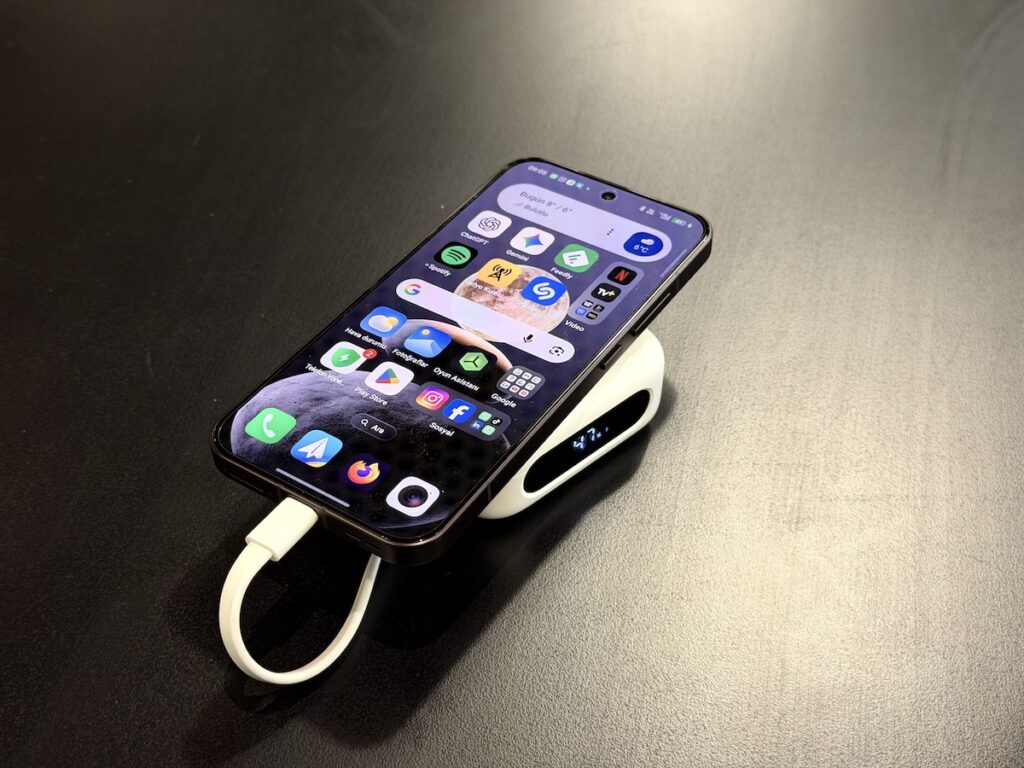
- Built-in Powerbank: A 10W USB-C output allows you to emergency charge your phone.
- Integrated Stand: A patented pop-out stand for hands-free video viewing.
- Digital Display: Shows individual battery percentages for both the case and each bud.
Design: Comfort vs. Bulk
The P41i follows a classic stem-style design with a satin finish that stays remarkably clean from fingerprints. Comfort is a standout feature; with five ear tip sizes (XS to XL), they remain secure and comfortable even during side-sleeping.
However, the case is the elephant in the room. Weighing roughly 115g and measuring nearly 3cm thick, it is one of the largest on the market. It fits in a pocket, but you’ll certainly feel it. Whether this bulk is acceptable depends entirely on how much you value having an emergency powerbank at all times.
Sound Quality: HearID is Mandatory
Out of the box, the P41i has a bass-heavy, V-shaped signature. While fun for pop and EDM, the bass can sometimes overshadow the vocals in acoustic tracks.
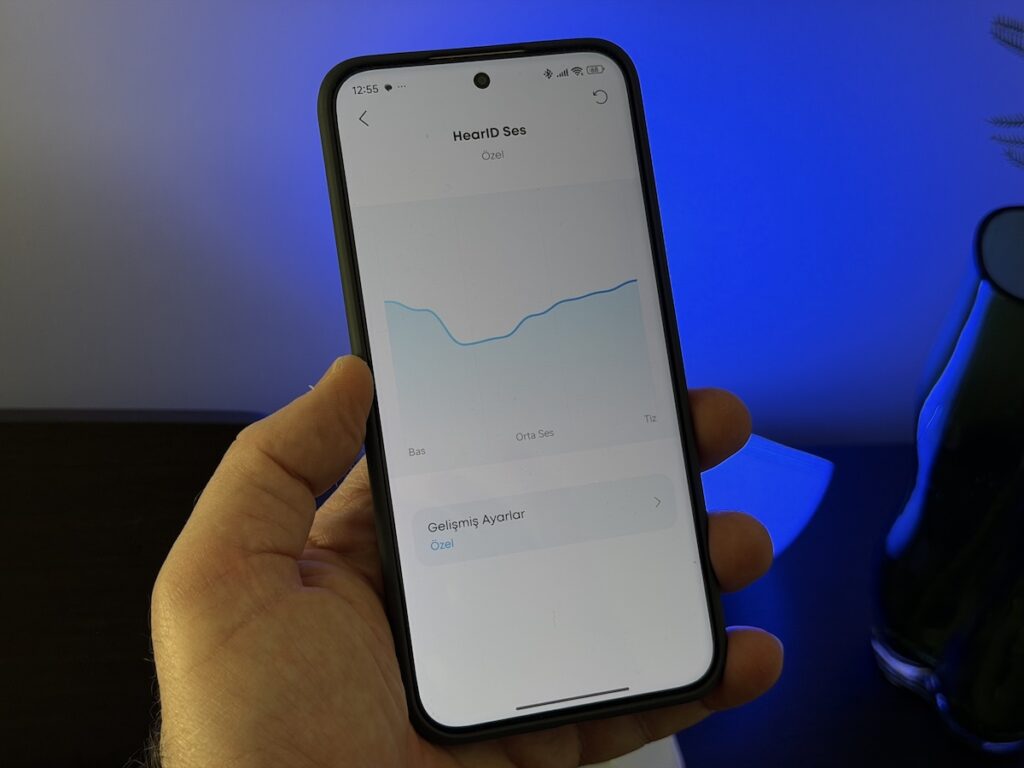
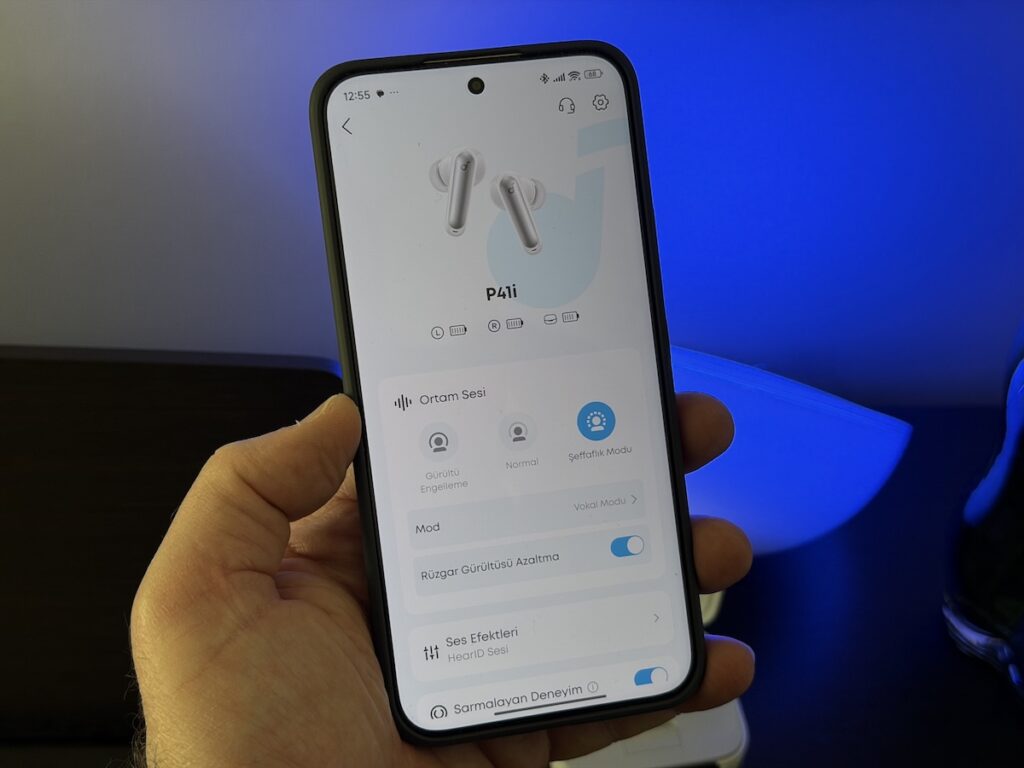
The game-changer here is HearID. By completing the hearing test within the Soundcore app, the audio profile transforms significantly, bringing much-needed clarity to the mids and highs. The app remains the best in its class, offering an 8-band custom EQ and over 20 presets to fine-tune your “Digital Flow.”
Noise Cancellation & Transparency
ANC is perhaps the P41i’s weakest link. While it effectively mutes consistent drones like air conditioners or plane engines, it struggles with sharp, sudden sounds like office chatter or traffic horns. The Transparency Mode, however, is excellent. It provides a natural sense of spatial awareness, making it safe for cycling or walking through busy UK streets.
Battery: The Undisputed King
This is where the P41i leaves every competitor in the dust.
- Single Charge: Up to 12 hours (ANC off) or 10 hours (ANC on).
- Total Time: 15–16 full recharges from the case lead to 192 hours of total playback.
- Fast Charging: 10 minutes gives you 5 hours of music. While the lack of wireless charging is a missed opportunity for a “charging-centric” product, the sheer endurance makes it the ultimate travel companion.
TechThames Verdict: Who is it for?
The Anker Soundcore P41i isn’t for the audiophile seeking the purest bit-rate. It’s for the modern digital nomad.
If you are tired of carrying extra cables, powerbanks, and phone stands in your bag, the P41i is a genius consolidation of gear. It’s a smart, durable, and comfortable choice that ensures you—and your phone—never run out of power on a long journey.
Copyright © 2026 TechThames.com. All rights reserved. Do not reproduce without permission.